

Hey there! I'm a supplier of sewage treatment equipment, and today I wanna dive into how our gear handles different types of sewage. Sewage isn't a one - size - fits - all deal, and that's where our top - notch equipment steps in.
Let's start with domestic sewage. You know, the stuff that comes out of our homes every day - from flushing the toilet to doing the dishes. Domestic sewage is mainly made up of organic matter, like human waste, food particles, and some soapy water. It's not overly complex compared to other types, but it still needs proper treatment.
Our Intelligent Negative Pressure Drainage System is a game - changer for handling domestic sewage. This system uses negative pressure to efficiently transport sewage from homes to the treatment site. You see, in traditional systems, gravity is the main force moving the sewage. But sometimes, in areas with flat terrain or when dealing with long - distance transportation, gravity just ain't enough. That's where our negative pressure system kicks in. It creates a suction force that pulls the sewage through pipes quickly and effectively.

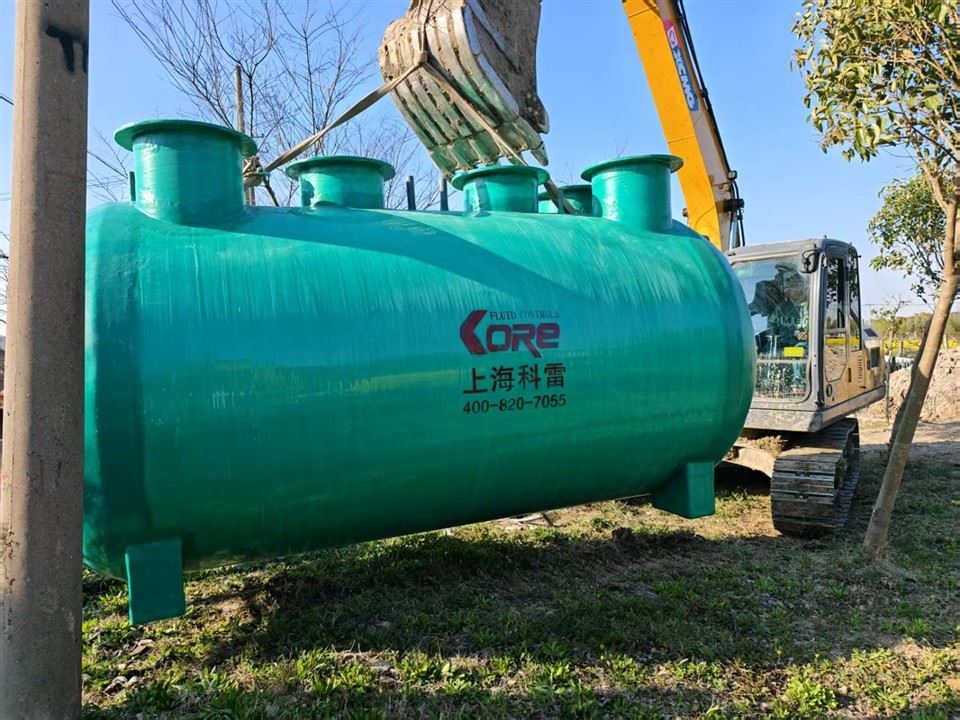
Once the domestic sewage reaches the treatment site, our Non - electric Sewage Purification Tank takes over. This tank is a genius piece of equipment. It uses natural processes like sedimentation, filtration, and biological decomposition to break down the organic matter in the sewage. There's no need for electricity, which is not only eco - friendly but also cost - effective. Inside the tank, the heavier solids sink to the bottom, forming sludge. Meanwhile, the lighter floating materials are skimmed off the top. The remaining liquid then passes through a series of filters, where bacteria break down the organic compounds into simpler, less harmful substances.
Next up, industrial sewage. This is a whole different ballgame. Industrial sewage can contain all sorts of nasty stuff, like heavy metals, chemicals, and oil. Different industries produce different types of sewage. For example, a chemical factory might have sewage full of toxic chemicals, while an oil refinery's sewage will have a high oil content.
When it comes to industrial sewage, our MBR System for Wastewater Treatment is a real hero. MBR stands for Membrane Bioreactor. This system combines biological treatment with membrane filtration. First, the sewage is introduced into a biological reactor where bacteria break down the organic matter. But what makes the MBR system special is the membrane filtration part. The membranes act like a super - fine sieve, trapping even the tiniest particles and contaminants. This includes heavy metals and chemicals that are often hard to remove using traditional methods.
The MBR system can handle high - strength industrial sewage. It can remove up to 99% of contaminants, making the treated water clean enough to be reused in some industrial processes or safely discharged into the environment. And it's a compact system, which is great for factories with limited space.
Agricultural sewage is another type that we deal with. It mainly comes from farms and contains things like animal manure, fertilizers, and pesticides. This type of sewage can be a major source of water pollution if not treated properly.
For agricultural sewage, we often use a combination of our equipment. The initial step can be using the negative pressure drainage system to collect the sewage from different parts of the farm. Then, the sewage can be treated in a modified version of the non - electric purification tank. We can adjust the biological processes inside the tank to deal with the specific contaminants in agricultural sewage. For example, we can introduce special bacteria that are good at breaking down pesticides and fertilizers.
One of the challenges with agricultural sewage is the large volume and the seasonal nature of its production. During the farming season, there's a lot more sewage being generated. But our equipment is designed to be flexible and scalable. We can add more treatment units or adjust the operation parameters to handle the increased load.
Now, let's talk about sewage from hospitals. Hospital sewage is a high - risk type because it can contain pathogens, drugs, and other medical waste. Treating hospital sewage is crucial to prevent the spread of diseases.
Our MBR system is also very effective for hospital sewage. The membrane filtration can trap pathogens like bacteria and viruses, preventing them from entering the environment. Additionally, we can add some disinfection steps in the treatment process. For example, we can use ultraviolet light or chemical disinfectants to kill any remaining pathogens in the treated water.
In all these cases, the key to effective sewage treatment is understanding the composition of the sewage and choosing the right equipment. Our range of sewage treatment equipment is designed to be versatile and adaptable. Whether it's domestic, industrial, agricultural, or hospital sewage, we've got a solution.
If you're in the market for sewage treatment equipment, we're here to help. We can offer customized solutions based on your specific needs. Whether you're a small - scale farm, a large industrial factory, or a local municipality, we can design a sewage treatment system that works for you. Our team of experts can assess your situation, recommend the best equipment, and provide installation and maintenance services.
So, if you're interested in improving your sewage treatment process or setting up a new one, don't hesitate to reach out. We're ready to have a chat with you about your requirements and see how we can make your sewage treatment more efficient and eco - friendly.
References
- Environmental Protection Agency (EPA). Guidelines for Sewage Treatment.
- Water Research Foundation. Advances in Sewage Treatment Technologies.