

Hey there! As a chemical pump supplier, I often get asked about how to calculate the performance of a chemical pump when dealing with different fluid densities. It's a crucial topic because the density of the fluid a pump is handling can significantly impact its performance. In this blog, I'll break down the key factors and steps to calculate the performance of a chemical pump with various fluid densities.
First off, let's understand why fluid density matters. The density of a fluid affects the amount of energy the pump needs to move it. A denser fluid is heavier, and thus, the pump has to work harder to transport it. This means that the power consumption, head, and flow rate of the pump can all change depending on the fluid density.
Key Performance Parameters
Before we dive into the calculations, let's quickly go over the main performance parameters of a chemical pump:
- Flow Rate (Q): This is the volume of fluid that the pump can move per unit of time, usually measured in gallons per minute (GPM) or cubic meters per hour (m³/h).
- Head (H): Head represents the energy that the pump imparts to the fluid. It's often measured in feet or meters and indicates the height to which the pump can lift the fluid.
- Power (P): Power is the amount of energy the pump consumes to operate. It's typically measured in horsepower (HP) or kilowatts (kW).
Impact of Fluid Density on Pump Performance
The relationship between fluid density and pump performance can be understood through the following equations:
1. Head
The head of a pump is generally not affected by the fluid density. This is because head is a measure of the energy per unit weight of the fluid. So, whether you're pumping water or a denser chemical, the head remains the same as long as the pump design and operating conditions don't change.
2. Power
The power required to operate a pump is directly proportional to the fluid density. The formula for calculating the power of a pump is:
[ P = \frac{\rho g Q H}{\eta} ]
Where:
- ( P ) is the power in watts (W)
- ( \rho ) is the fluid density in kilograms per cubic meter (kg/m³)
- ( g ) is the acceleration due to gravity (approximately 9.81 m/s²)
- ( Q ) is the flow rate in cubic meters per second (m³/s)
- ( H ) is the head in meters (m)
- ( \eta ) is the pump efficiency
As you can see from the formula, if the fluid density (( \rho )) increases, the power required to operate the pump also increases.
3. Flow Rate
In most cases, the flow rate of a pump is not directly affected by the fluid density. However, if the fluid is more viscous (which is often related to higher density), it can cause additional friction losses in the piping system, which may reduce the flow rate.
Calculating Pump Performance with Different Fluid Densities
Let's go through an example to illustrate how to calculate the pump performance with different fluid densities.
Suppose we have a pump that is designed to operate with water (density ( \rho_{water} = 1000 \ kg/m³ )) at a flow rate of ( Q = 10 \ m³/h ) and a head of ( H = 20 \ m ). The pump efficiency is ( \eta = 0.8 ).
First, let's calculate the power required to pump water:
-
Convert the flow rate to cubic meters per second:
- ( Q = \frac{10}{3600} \ m³/s \approx 0.00278 \ m³/s )
-
Use the power formula:
- ( P_{water} = \frac{\rho_{water} g Q H}{\eta} )
- ( P_{water} = \frac{1000 \times 9.81 \times 0.00278 \times 20}{0.8} )
- ( P_{water} \approx 682 \ W )
Now, let's say we want to use the same pump to handle a chemical with a density of ( \rho_{chemical} = 1200 \ kg/m³ ). Since the head and flow rate remain the same (assuming no significant viscosity effects), we can calculate the new power requirement:
- ( P_{chemical} = \frac{\rho_{chemical} g Q H}{\eta} )
- ( P_{chemical} = \frac{1200 \times 9.81 \times 0.00278 \times 20}{0.8} )
- ( P_{chemical} \approx 818 \ W )
As you can see, the power required to pump the chemical is higher than that for water due to its higher density.
Choosing the Right Pump for Different Fluid Densities
When selecting a chemical pump for different fluid densities, it's important to consider the following:
- Power Rating: Make sure the pump has enough power to handle the denser fluid. You may need to select a pump with a higher power rating if you plan to use it with fluids of varying densities.
- Material Compatibility: Ensure that the pump materials are compatible with the chemical you're pumping. Different chemicals can have different corrosive properties, so it's crucial to choose a pump made of the right materials.
At our company, we offer a wide range of chemical pumps suitable for various fluid densities. For example, the KCB Gear Oil Pump is a great option for handling viscous and high-density fluids. It has a robust design and can provide reliable performance even under challenging conditions.
Another popular choice is the I-1B Screw Pump. This pump is known for its smooth operation and high efficiency, making it suitable for a variety of chemical applications with different fluid densities.
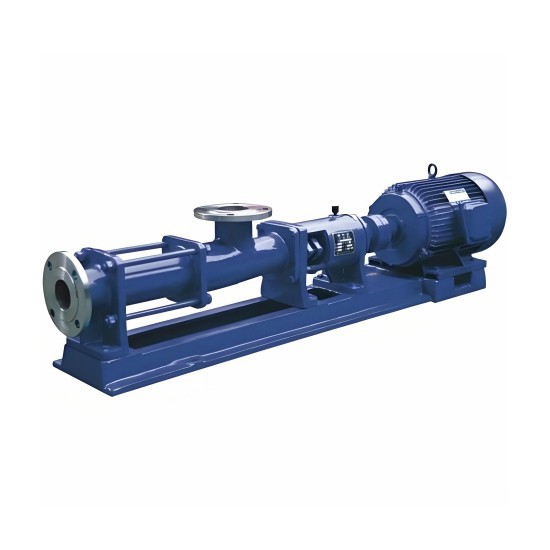

If you need a pump for applications where self - priming is required, the ZX Self - priming Centrifugal Pump is an excellent option. It can quickly prime itself and handle fluids with different densities effectively.
Conclusion
Calculating the performance of a chemical pump with different fluid densities is an important aspect of pump selection and operation. By understanding the impact of fluid density on pump performance parameters such as power, head, and flow rate, you can make informed decisions when choosing a pump for your specific application.
If you're in the market for a chemical pump and need help with calculating the performance for different fluid densities, don't hesitate to reach out. We're here to assist you in finding the right pump for your needs and ensuring its optimal performance. Contact us to start the procurement discussion and find the perfect chemical pump solution for your business.
References
- "Pump Handbook" by Igor J. Karassik et al.
- "Chemical Engineering Fluid Mechanics" by Ron Darby.