

Installing a dry sewage pump in a basement is a critical task that requires careful planning and execution. As a trusted supplier of dry sewage pumps, I understand the importance of proper installation to ensure the pump's optimal performance and longevity. In this blog post, I will share some essential installation precautions that you should keep in mind when installing a dry sewage pump in your basement.
1. Site Selection and Preparation
The first step in installing a dry sewage pump is to select an appropriate site in the basement. The site should be level, dry, and well-ventilated to prevent the accumulation of moisture and fumes. It is also important to ensure that the site is easily accessible for maintenance and repairs.
Before installing the pump, you should prepare the site by cleaning the area and removing any debris or obstructions. You may also need to install a concrete pad or a steel base to provide a stable foundation for the pump. Make sure that the pad or base is level and securely anchored to the floor to prevent vibration and movement during operation.
2. Electrical Requirements
Dry sewage pumps are typically powered by electricity, so it is crucial to ensure that the electrical system in your basement can support the pump's power requirements. You should consult a qualified electrician to determine the appropriate electrical circuit and wiring for your pump.
The electrical circuit should be dedicated to the pump and should be protected by a circuit breaker or a fuse with the appropriate rating. The wiring should be properly sized and installed in accordance with local electrical codes to prevent electrical hazards. It is also important to ensure that the pump is grounded to prevent electrical shock.
3. Plumbing Connections
Proper plumbing connections are essential for the efficient operation of a dry sewage pump. You should use high-quality pipes and fittings that are compatible with the pump's discharge size and pressure requirements. The pipes should be installed in a straight line with minimal bends and elbows to reduce friction and improve flow.
When connecting the pump to the plumbing system, you should use a check valve to prevent backflow of sewage into the pump. The check valve should be installed close to the pump's discharge outlet and should be properly sized and rated for the pump's flow rate and pressure. You should also install a union or a coupling between the pump and the plumbing system to facilitate easy disconnection for maintenance and repairs.
4. Ventilation
Ventilation is important to prevent the accumulation of harmful gases and odors in the basement. A dry sewage pump generates heat and moisture during operation, which can create a humid and unpleasant environment if not properly ventilated. You should install a ventilation system in your basement to remove the heat and moisture and to provide fresh air circulation.

The ventilation system should be designed to exhaust the air outside the building and should be properly sized and installed in accordance with local building codes. You may also need to install a carbon monoxide detector in your basement to monitor the levels of carbon monoxide, which is a colorless and odorless gas that can be produced by the pump's motor.
5. Noise and Vibration
Dry sewage pumps can generate noise and vibration during operation, which can be a nuisance to you and your neighbors. To reduce noise and vibration, you should install the pump on a vibration isolation pad or a rubber mount. The pad or mount should be properly sized and rated for the pump's weight and vibration frequency.
You should also ensure that the pump is properly aligned and balanced to prevent excessive vibration. If the pump is installed on a concrete pad or a steel base, you can use a vibration dampening material between the pump and the base to further reduce vibration.
6. Maintenance and Inspection
Regular maintenance and inspection are essential to ensure the reliable operation of a dry sewage pump. You should follow the manufacturer's recommended maintenance schedule and procedures to keep the pump in good working condition. This may include cleaning the pump, checking the electrical connections, lubricating the bearings, and replacing the worn parts.
You should also inspect the pump regularly for signs of wear, damage, or leaks. If you notice any problems, you should contact a qualified technician to repair or replace the pump as soon as possible. By performing regular maintenance and inspection, you can extend the lifespan of the pump and prevent costly repairs and downtime.
7. Types of Dry Sewage Pumps
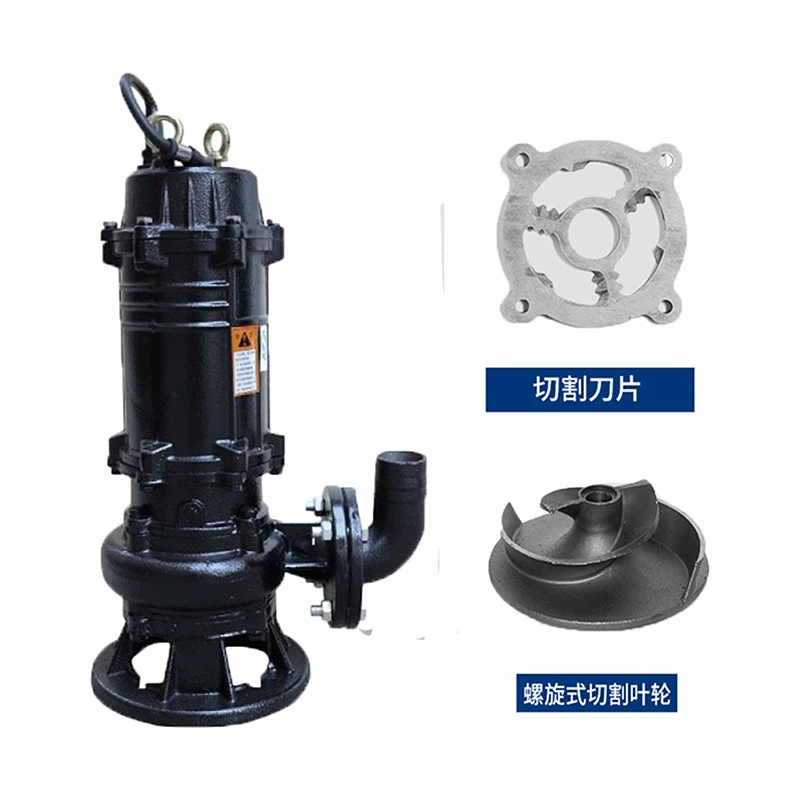
There are several types of dry sewage pumps available on the market, each with its own features and advantages. As a supplier, I offer a range of high-quality dry sewage pumps, including Cutting-type Submersible Sewage Pump, Stirring Sewage Pump, and Non-blocking Submersible Sewage Pump.
- Cutting-type Submersible Sewage Pump: This type of pump is equipped with a cutting blade that can shred solid waste and debris, preventing clogging and ensuring smooth operation. It is suitable for pumping sewage containing large solids and fibrous materials.
- Stirring Sewage Pump: The stirring sewage pump is designed with a stirring device that can agitate the sewage and prevent the settling of solids. This helps to improve the pump's efficiency and reduce the risk of clogging. It is ideal for pumping sewage with high solid content.
- Non-blocking Submersible Sewage Pump: As the name suggests, this type of pump is designed to prevent clogging. It features a unique impeller design and a large passage that allows solids to pass through easily. It is suitable for pumping sewage with small to medium-sized solids.
Conclusion
Installing a dry sewage pump in a basement requires careful planning and attention to detail. By following the installation precautions outlined in this blog post, you can ensure the safe and efficient operation of your pump. Remember to select the right type of pump for your specific needs, consult a qualified professional for electrical and plumbing work, and perform regular maintenance and inspection to keep the pump in good working condition.
If you are in the market for a dry sewage pump, I invite you to contact us to discuss your requirements. Our team of experts can help you select the right pump for your basement and provide you with professional installation and after-sales support. We are committed to providing high-quality products and services to our customers and ensuring their satisfaction.
References
- Manufacturer's installation and operation manuals for dry sewage pumps.
- Local building and electrical codes.
- Plumbing and mechanical engineering textbooks.