

As a supplier of KCB Gear Oil Pumps, I am often asked about the working principle of these pumps. In this blog post, I will delve into the inner workings of KCB Gear Oil Pumps, explaining how they function and their key components.

Basic Structure of KCB Gear Oil Pump
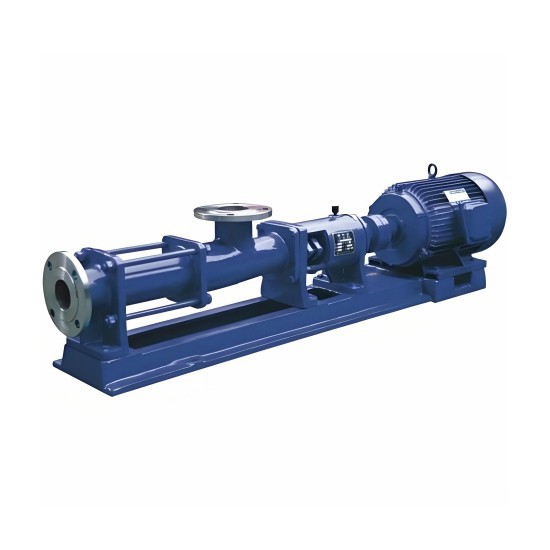
The KCB Gear Oil Pump is a type of positive displacement pump. Its main components include a pair of gears (usually spur gears), a pump body, a front and rear cover, and seals. The gears are the heart of the pump. They are precisely machined and installed in the pump body. One gear is the driving gear, which is connected to the power source (usually an electric motor), and the other is the driven gear. The two gears mesh with each other closely.
Working Principle
- Suction Process
When the pump starts, the driving gear rotates under the action of the power source. As the driving gear rotates, it drives the driven gear to rotate in the opposite direction. At the suction port of the pump, the teeth of the two gears gradually separate from each other. This creates a low - pressure area in the space between the teeth. According to the principle of fluid mechanics, the liquid (usually oil in the case of KCB Gear Oil Pumps) in the suction pipeline is forced into this low - pressure area under the action of the external atmospheric pressure or the pressure of the liquid source. The liquid fills the spaces between the teeth of the gears and is carried along the inner wall of the pump body towards the discharge port. - Discharge Process
As the gears continue to rotate, the liquid trapped between the teeth moves towards the discharge port. When the teeth of the two gears start to mesh again at the discharge side of the pump, the volume of the space between the teeth decreases. This compression of the liquid forces it out of the pump through the discharge port. The meshing of the gears ensures a continuous and stable flow of the liquid, as it effectively seals the suction and discharge sides of the pump, preventing backflow.
Advantages of KCB Gear Oil Pump Based on Working Principle
- Positive Displacement
Since the KCB Gear Oil Pump is a positive displacement pump, it can deliver a constant volume of liquid per revolution of the gears, regardless of the pressure at the discharge port (within its design limits). This makes it suitable for applications where a precise and consistent flow rate is required, such as in lubrication systems, hydraulic systems, and some chemical processes. - Self - Priming
The ability to create a low - pressure area during the suction process gives the KCB Gear Oil Pump self - priming capabilities. It can draw the liquid into the pump without the need for external priming devices in many cases. This simplifies the installation and operation of the pump, especially in situations where the liquid source is located below the pump. - High - Pressure Capability
The meshing of the gears provides a good sealing effect, allowing the pump to generate relatively high pressures. This makes it suitable for applications where high - pressure delivery of oil is required, such as in some industrial machinery lubrication systems.
Applications of KCB Gear Oil Pump
- Lubrication Systems
In various industrial machinery, such as machine tools, compressors, and engines, KCB Gear Oil Pumps are widely used to supply lubricating oil to the moving parts. The constant and reliable flow of oil ensures proper lubrication, reducing friction and wear, and extending the service life of the machinery. - Hydraulic Systems
In hydraulic systems, these pumps can be used to generate the required hydraulic pressure to operate hydraulic cylinders, motors, and other hydraulic components. Their ability to provide a stable flow and pressure makes them suitable for applications where precise control of the hydraulic system is necessary. - Chemical Industry
Although mainly designed for oil, KCB Gear Oil Pumps can also be used in some chemical processes to transfer low - viscosity chemicals. However, in such cases, the materials of the pump components need to be carefully selected to ensure compatibility with the chemical being transferred.
Comparison with Other Types of Pumps
- Compared with I - 1B Screw Pump
The I - 1B Screw Pump operates on the principle of screw rotation. While both the KCB Gear Oil Pump and the I - 1B Screw Pump are positive displacement pumps, the screw pump generally has a smoother flow and is more suitable for handling high - viscosity fluids. On the other hand, the KCB Gear Oil Pump is simpler in structure and more cost - effective for applications where the viscosity of the fluid is relatively low. - Compared with ZX Self - priming Centrifugal Pump
The ZX Self - priming Centrifugal Pump works on the principle of centrifugal force. It uses an impeller to accelerate the liquid and create a high - velocity flow, which is then converted into pressure energy. In contrast, the KCB Gear Oil Pump uses the meshing of gears to displace the liquid. Centrifugal pumps are generally better suited for applications where large flow rates and relatively low pressures are required, while KCB Gear Oil Pumps are more suitable for applications where a constant flow rate and higher pressures are needed.
Considerations in Using KCB Gear Oil Pump
- Viscosity of the Liquid
The working efficiency of the KCB Gear Oil Pump is closely related to the viscosity of the liquid being pumped. If the viscosity is too high, it may increase the resistance to the rotation of the gears, leading to higher power consumption and potential damage to the pump. On the other hand, if the viscosity is too low, it may cause leakage between the meshing gears, reducing the pump's volumetric efficiency. - Pressure Limitations
Although the KCB Gear Oil Pump can generate relatively high pressures, it has its pressure limitations. Exceeding the maximum allowable pressure can cause damage to the pump components, such as deformation of the gears or damage to the seals. Therefore, it is necessary to ensure that the pressure at the discharge port does not exceed the rated pressure of the pump.
Conclusion
The KCB Gear Oil Pump is a reliable and widely used pump in many industries. Its working principle, based on the meshing of gears and the creation of low - and high - pressure areas, allows it to provide a constant and stable flow of liquid. Understanding its working principle is crucial for users to select the right pump for their applications, operate it correctly, and maintain it properly.
If you are interested in our KCB Gear Oil Pump or have any questions about its working principle, application, or performance, please feel free to contact us for further discussion and procurement negotiation. We are committed to providing high - quality pumps and excellent after - sales service to meet your needs.
References
- "Fluid Mechanics" textbooks, which provide fundamental knowledge about fluid flow and pressure principles relevant to pump operation.
- Manufacturer's manuals of KCB Gear Oil Pumps, which contain detailed information about the pump's design, working principle, and performance parameters.